
NARI Commercial Vehicle Leasing Member Benefit
NARI members can access commercial vehicle sourcing, financing, leasing, wraps, upfits, delivery and exclusive credits through Apple Commercial Leasing with this new exclusive member benefit.

By Randy Williams
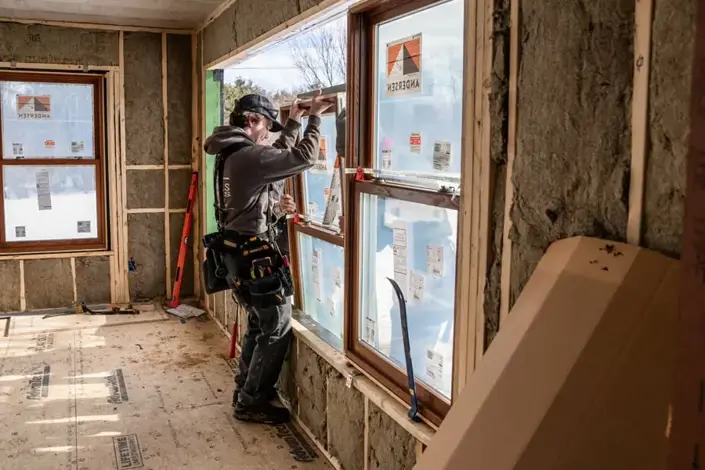
Changing the position where a window sits in a rough opening can improve overall performance and durability. Most of us in residential construction are used to installing outie windows — a nail-fin or flanged unit set flush with the siding or cladding. It’s simple, fast, and we are familiar with the details of connecting the water and air control layers to the window. It’s an assembly we’ve been working with for years. But as more clients start asking for high-performance builds, or if you’re working on deep energy retrofits, you’re probably going to start running into a change in window installations.
Innie and middie windows are growing in popularity. These installation styles are common in commercial work, but they’re still new to many residential contractors. Getting them wrong can lead to water problems, poor air sealing, comfort issues, and callbacks. Done right, though, they can improve energy performance and durability. Here’s what you need to know.
Outie windows: The standard choice
Outies are what most of us are used to seeing in the field. The window sits flush with the exterior cladding and is usually installed using a nailing fin.
Innie windows: Better protection, tougher detailing
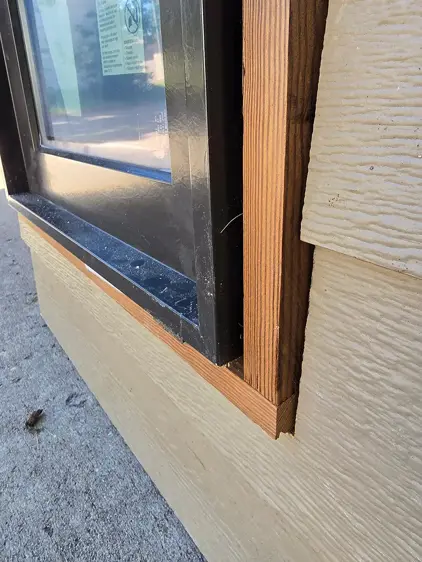
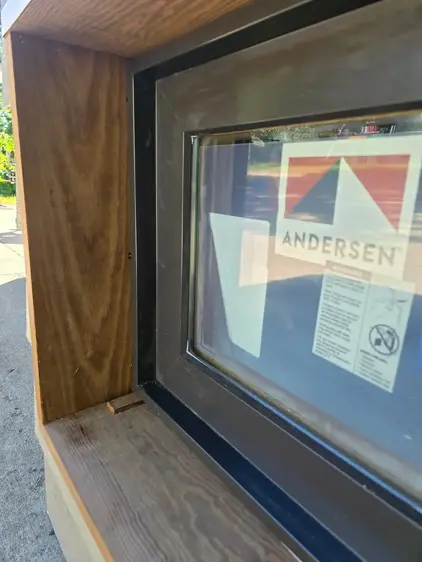
An innie pushes the window to the far inside edge of the rough opening. The window head is fully protected by the building’s framing.
Pros: Pushing the window toward the inside can help cut down on bulk water issues, at least from the window head, as long as it’s properly flashed. Another big advantage is the ease of future maintenance and window replacement. Swapping the window may be easier because you can remove the interior trim and window fasteners without touching the siding. The window can be replaced mostly from the interior. Finishing inside is also straightforward, as no extension jambs are needed.
Cons: As mentioned, managing bulk water at the head of the window is a detail most contractors know well. The sill, however, often requires specialty products and extra care for long-term durability. Energy performance isn’t optimized because the window is pushed towards the edge of the insulation plane, much like the outie window. Air-sealing can also be tricky, depending on where the primary air barrier is. If the drywall or an interior membrane is your air control layer, sealing can be easy. If the air barrier is on the exterior sheathing or is provided by the WRB, you’re in for more work.
When to do it? The choice of using an innie window installation is often architecturally or design-driven. It could also be climate-driven. For example, when it's especially important to reduce exposure to rain and UV.
Takeaway: Know your client’s goals and your crew’s skill level (additional training may be a necessity). The detailing gets more complicated as you move from outie to middie or innie. That being said, the benefits in performance and durability often outweigh the cost.
NARI members can access commercial vehicle sourcing, financing, leasing, wraps, upfits, delivery and exclusive credits through Apple Commercial Leasing with this new exclusive member benefit.

Rental clients do not want a custom kitchen. They want a spec they can repeat on every turn. See how the four ways to refresh a rental kitchen compare in terms of crew time, sourcing, and callback risk, plus where your margin really goes and when to walk away from a refacing bid.

On the 25th anniversary of 9/11, National Association of the Remodeling Industry members from Long Island and New Jersey reflect on the rescue and recovery mission following the terrorist attacks on the World Trade Center.