By Bob Vance
More homeowners are requesting estimates, yet many are not moving directly into construction. Closing the estimate-to-contract gap starts with understanding what remains unresolved after the proposal arrives, then combining dependable follow-up with personal guidance.
That gap is the space between delivering an estimate and earning a signed agreement. It does not always mean the homeowner has chosen another remodeler. Often, the homeowner remains interested but uncertain about cost, scope, timing, disruption, or competing proposals.
Recent research makes that distinction important. The Home Improvement Research Institute’s Q2 2026 Project Activity Tracker found that quote requests rose from 17% to 20%. The share of homeowners who had received a bid for a project that had not started also increased from 22% to 27%.
Remodelers may have more sales sitting in their existing pipeline than they realize.
A stalled proposal often signals an unresolved question or concern.
Diagnose the stall before sending another reminder. Ask, "What questions or concerns do you still have about the proposal?" Address the issue, agree on the next step, and follow the homeowner's timeline.
How Estimate Turnaround Time Affects Remodeling Sales

Estimate speed matters because homeowner attention has a shelf life. If a detailed proposal takes weeks to produce, a well-matched prospect may keep talking with companies that respond sooner. Yet speed without careful review can create missing scope, weak assumptions, and margin problems later.
A takeoff is the process of measuring and listing the labor and materials required for a project. Purpose-built estimating technology can reduce repetitive work and help teams prepare proposals consistently. That leaves more time to review site conditions, confirm local pricing, and explain the scope.
The goal should not be an unreviewed bid delivered as quickly as possible. Remodelers still need to verify quantities, assumptions, exclusions, and conditions that software cannot see. Technology creates the most value when it improves both response time and the quality of the conversation that follows.
Why Homeowners Hesitate After Receiving a Remodeling Estimate
A homeowner may trust the company yet need time to compare scope, discuss financing, or prepare for disruption. Many stalls trace back to one of five concerns: price, scope, timing, disruption, or uncertainty about the remodeler.
Silence can signal uncertainty rather than disinterest. Abandoning delayed prospects wastes opportunities. Generic sales messages make homeowners feel pursued instead of helped.
Ask what still feels unclear, then listen for the concern behind the answer. A question about start dates may reflect anxiety about disruption. A request for a lower price may reveal that the homeowner does not understand the differences between bids.
Common Reasons Remodeling Estimates Don’t Become Contracts
Price gets attention, but it is rarely the only factor behind a delayed decision. Several practical issues can stop a qualified prospect from moving forward.
Unclear Scope, Allowances and Exclusions
Two estimates may use different assumptions, allowances, materials, or levels of project management. An allowance is a placeholder amount for an item that has not been selected, such as tile or plumbing fixtures. Without those details, the homeowner cannot tell whether one proposal costs less or simply includes less.
A useful proposal explains the scope, exclusions, allowances, payment structure, likely timeline, and each party’s responsibilities. Clear documentation supports the factual, responsible sales practices reflected in NARI’s Code of Ethics. It also gives homeowners a sound basis for deciding.
Differences Between Remodeling Proposals Aren’t Clear
Remodelers understand the value of careful planning, experienced supervision, and documented change procedures. Homeowners may not recognize those differences from a line-item estimate.
Explain how preconstruction planning reduces surprises, how communication works during construction, and who takes responsibility when conditions change. Help the homeowner compare what each proposal actually provides without attacking another bid.
Unresolved Remodeling Budget Concerns
A homeowner may hesitate because the project exceeds the original expectation. Financing costs and future change orders may add to that concern.
A vague "just checking in" email will not resolve those concerns. A direct conversation can explain cost drivers, separate priorities from optional features, or explore phasing. Clarify the tradeoffs behind the number instead of discounting the project.
No Clear Next Step After the Estimate
Some proposals end with a price but no clear decision point. The homeowner may not know whether to schedule a review call, approve a design agreement, or request a revised scope.
Every proposal should identify the next reasonable step. A complex whole-home remodel may require a proposal review meeting, while an early planning inquiry may need a budgeting conversation before any formal estimate.
How to Use Automation for Remodeling Estimate Follow-Up
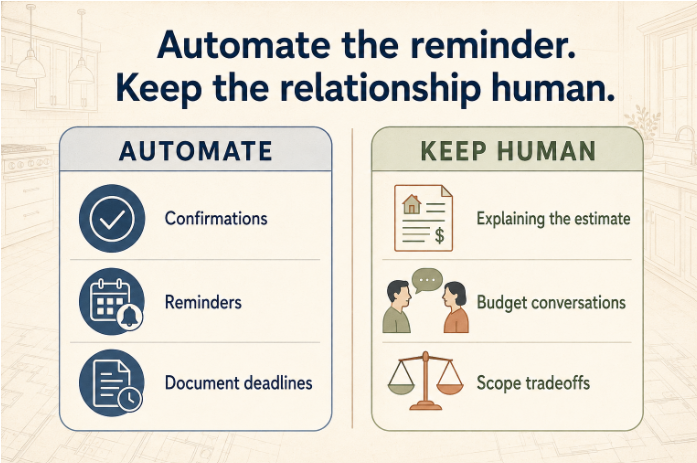
Automation can handle predictable coordination: consultation confirmations, appointment reminders, proposal alerts, internal follow-up tasks, and requested planning resources.
For prospects with longer timelines, occasional guidance about budgeting or construction preparation can maintain the relationship without assuming they are ready now.
The strongest systems make follow-up reliable without trying to replace human judgment.
When Remodelers Should Follow Up Personally
A person should step in when the homeowner needs interpretation, reassurance, or a meaningful choice. That includes explaining the proposal, discussing budget, comparing scope options, addressing disruption, and helping the homeowner weigh tradeoffs.
These conversations require listening. A homeowner concerned about living without a kitchen for eight weeks needs an explanation of sequencing, temporary arrangements, communication, and scheduling risks, not another portfolio link.
Personal follow-up reveals concerns software cannot reliably infer. Another proposal may omit assumed work, or the preferred start date may conflict with permitting and lead times. Conversation brings those issues into the open.
Signs Automated Sales Follow-Up Is Hurting Homeowner Trust
Automation becomes counterproductive when the system continues talking without responding. Common warning signs include:
- A scheduled message ignores a question the homeowner just asked.
- The prospect receives information for the wrong project type.
- Several emails or texts arrive too close together.
- The language creates urgency the homeowner has not expressed.
- Sales messages continue after the homeowner raises a serious concern.
- No identifiable employee takes responsibility for the conversation.
Review scheduled communication from the homeowner's perspective. Check the timing, tone, sender, reply path, and pause rules. Every message should make a real conversation easier.
How to Build a Remodeling Estimate Follow-Up Process
A practical follow-up system does not need to be complicated. It needs clear ownership and room for judgment.
Assign one person to every active proposal. Define when that person follows up and when automation stops. Record the homeowner’s main concern, timing, decision-makers, and agreed next step so each conversation builds on the last.
Create resources for common questions, such as an allowance guide, preconstruction video, or disruption checklist. Employees should choose the resource based on the conversation.
Make it easy for the homeowner to reply to a real person.
Metrics to Track Remodeling Proposal-to-Contract Conversion
Open rates say nothing about whether a homeowner understood the bid. Track the numbers that describe the actual gap:
- Proposal-to-contract rate, overall and by salesperson
- Average time from proposal delivery to a decision
- Documented reasons jobs are lost, in the homeowner's words
- Follow-up completion rate against what was scheduled
- Quality of the customer response, not just whether one arrived
Reviewed monthly, these measures reveal whether proposals are being declined or simply never resolved. Those are different problems with different fixes.
Frequently Asked Questions About Remodeling Estimate Follow-Up
How Often Should a Remodeler Follow Up After Sending an Estimate?
There is no universal schedule for every project. Set the next follow-up expectation during the proposal conversation, then adjust it to the homeowner’s timeline and unanswered questions. A planned, relevant contact is more useful than repeated generic reminders.
Should Remodelers Automate Estimate Follow-Up?
Yes, but technology should support consistency rather than replace personal communication. Use it for reminders, tasks, and relevant resources. Start a direct conversation when the homeowner needs help with price, scope, timing, disruption, or tradeoffs.
What Should a Remodeler Ask After Sending a Proposal?
Ask, "What questions or concerns do you still have about the proposal?" This invites useful feedback without forcing a decision and can reveal gaps that affect future proposals.
Review Your Last 20 Remodeling Proposals to Identify Sales Gaps
Technology can make follow-up dependable. A knowledgeable person makes it relevant. Pull the last 20 proposals your company delivered and sort each one into one of four groups:
|
Outcome
|
What to learn
|
|
Signed
|
What did we do right?
|
|
Lost to a competitor
|
What did they offer that we did not?
|
|
Price objection
|
Was price the real issue, or was the value unclear?
|
|
Went silent
|
What question or concern remained unresolved?
|
Then ask how many stalled projects ended because the homeowner no longer wanted the work, and how many never reached a clear decision. The answer can show where your proposal, sales conversation, or follow-up needs attention.
Automate the reminder. Keep the relationship human.
About the Author
Bob Vance is the founder of Home Remodeler SEO, a digital marketing agency that helps remodeling and home improvement companies generate and convert qualified opportunities. He works with remodelers across the country on SEO, lead generation, and digital marketing strategy.